Ethics in Street Photography
Ethics in street and documentary photography is a conversation that never really closes. There's no rulebook that resolves every situation, and anyone who tells you otherwise probably hasn't spent much time actually doing it. What follows is how I think about it, the questions I ask myself, and where I've landed, for now.
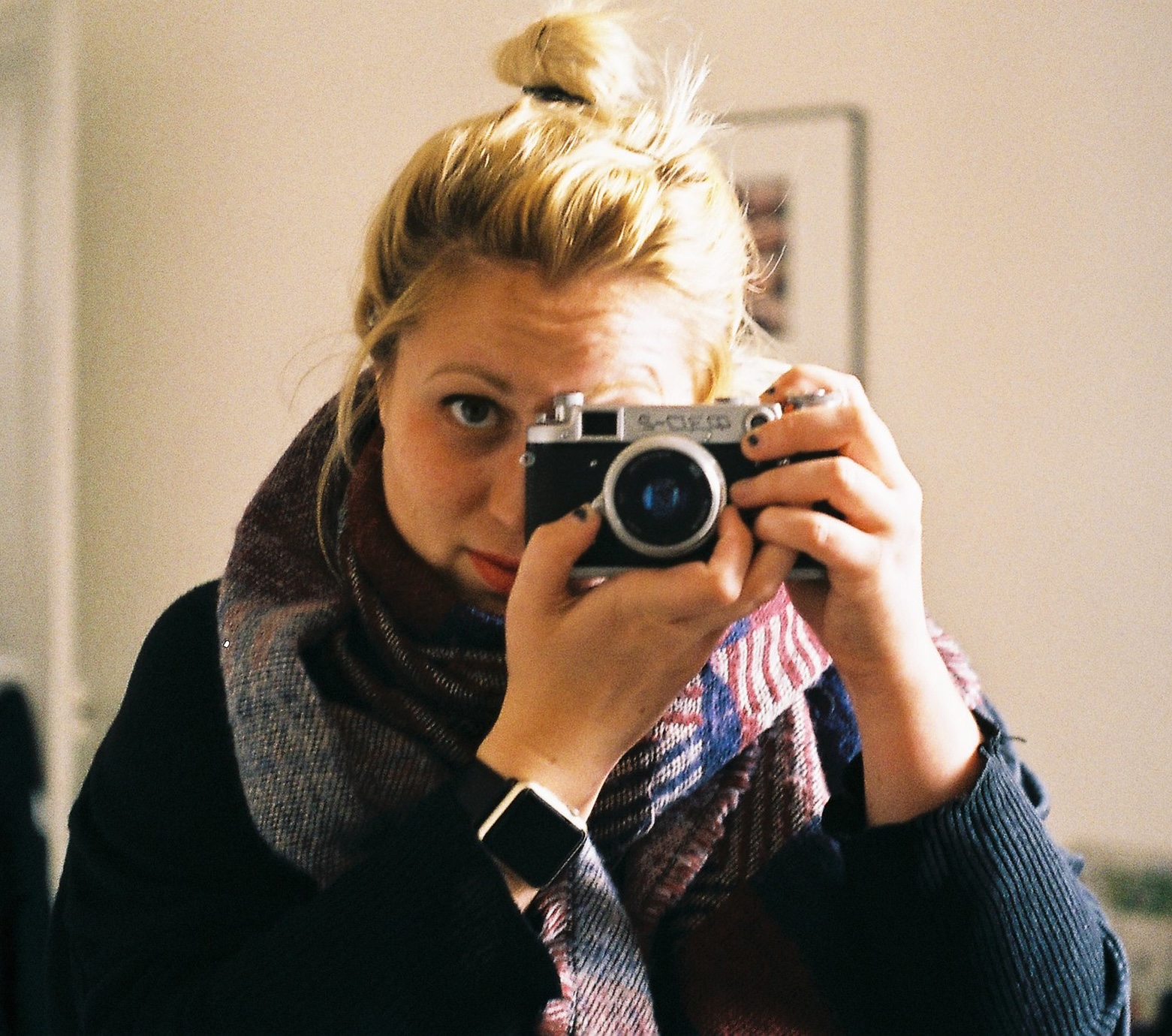
The self-consciousness problem
Before any ethical question about subjects, there's a more immediate one: actually raising the camera.
In a city, you're anonymous. Nobody cares what you're doing. The moment you pull out a camera with the intent to photograph people, something shifts internally. Suddenly you feel visible, scrutinized, like you're taking up space you haven't earned. That's stage fright, and it doesn't fully go away. It gets easier. But if you're waiting to stop feeling it before you start shooting, you'll be waiting a while.
Think about how much attention you actually pay to what other people around you are doing. Most people are absorbed in their own experience. The person ranting on a street corner, the busker, the person doing something inexplicable outside a coffee shop, nobody's stopping to stare. You're not as conspicuous as it feels. In most cases, raising your camera and composing a shot intentionally, openly, results in nothing. No reaction, no confrontation, no problem. Most people don't care. When someone does react, there's usually a clear reason.
Can versus should
Legal permissibility in public space is not the same as ethical permissibility, and collapsing the two is where a lot of bad street photography comes from. Being in public doesn't mean a person has no reasonable expectation of consideration from others, and we tend to forget that the moment we have a camera in our hands.
It's also worth knowing the actual laws for wherever you're shooting. Consent requirements vary significantly by country, and Wikimedia Commons maintains a useful breakdown by region.
Two ideas I come back to: punching up versus punching down, and harm reduction.
Punching up means the photographic act is directed at something or someone exercising power over others. A street preacher trying to guilt-trip passersby into giving money. A counter-protester using intimidation. A police officer acting in a context where documentation matters. If someone is actively diminishing the agency of others, shining a light on that is not only permissible, it can be an ethical obligation.
Punching down is the inverse: using a position of relative privilege to extract images from someone more vulnerable, images that serve your creative or social interests without regard for the person in front of the camera. That's not street photography. It's using the genre as cover for something else.
Harm reduction is the baseline when the situation is ambiguous. You can't always do good. You can always try not to add to harm. If someone is visibly in distress on the subway, you can't fix their situation. You can choose not to photograph them, and that choice counts for something.
If someone avoids the camera
Somebody puts a hand up. Turns their face. Ducks out of the frame. Put the camera down.
This isn't complicated as a principle, though it requires some honesty with yourself in the moment. You're not entitled to any particular photograph. There are always other shots. The argument of "but my art" falls apart fast when the other side of the equation is a real person telling you they don't want to be documented.
A story you have to take from someone who doesn't want to give it isn't a story worth telling.
If someone reacts to being photographed and the interaction turns confrontational, the move is openness and a willingness to delete, not defensiveness, not legalisms. Being upfront about what you're doing almost always lowers the temperature. Showing someone what you captured can turn a tense moment into an actual human interaction. That has resulted in handshakes, email exchanges, people following my work. It doesn't have to be adversarial.
Vulnerability
This is where the nuance gets harder to resolve cleanly.
How do you differentiate between someone in distress and a moment worth capturing that happens to involve emotion? Is it enough to think "there's a story here," or does that reasoning sometimes function as cover for something you'd rather not examine?
There's no formula. Context is everything. Some useful questions:
Is the distress individual or contextual? A person at a protest in distress because of what they're witnessing is part of a larger story. Their emotion is inseparable from the thing the photograph would actually be documenting. A person crying alone on public transit because of something in their private life is not broadcasting that story to be told by you. Those are different photographs.
Are you photographing the distress, or what's causing it? One centers the person as the subject. The other makes them part of something larger. The frame matters. So does your intent going in.
Would you want that photograph taken of you? Not in an abstract sense. Specifically: if you were having the worst day of your life and you had to get yourself home, falling apart in a public space, would you want someone's camera on you? If the answer is no, consider why you think the person in front of you would feel differently.
Could this image benefit the subject or their situation? Not in a vague eventual sense. Concretely: does this photograph have somewhere to go that could actually help? If the answer is no, and what you'd be telling is primarily an aesthetic story, that's worth sitting with.
The "story to tell" problem
There's a specific version of this that comes up constantly around photographing unhoused people and people in poverty, and vulnerable people more broadly. The defensive framing is usually: I'm documenting a reality that needs to be seen. I'm drawing attention to an injustice.
That reasoning can be genuine. It can also be what gets called poverty porn: images that extract visual impact from someone's suffering and deposit it into a portfolio or an Instagram feed, where it generates a response that benefits the photographer, not the subject.
The juxtaposition shot, unhoused person in front of a luxury building, has become such a recognizable trope that it's worth asking what it's actually adding. The story of wealth disparity is real and ongoing and worth telling. But if you haven't asked yourself what you're contributing to that story that hasn't already been contributed, and what you intend to do with the photograph besides post it, then "I'm documenting an injustice" is doing a lot of heavy lifting for what might just be a technically interesting frame.
Be honest about your intent and follow through on it. If you care enough to photograph the story, care enough to do something with it. Put your artist statement behind it. Know what it's saying. Know where it's going.
If the image doesn't create a concrete thought in your head, if it doesn't speak to you clearly, you can't broadcast it outward with any sincerity. Start there.
Intent versus interpretation
Once a photograph is out in the world, you don't own its meaning anymore.
I have a photo of Paris taken from Parc des Buttes-Chaumont, looking over Sacré-Coeur. A travel photo. Pretty. But, then it made its way to r/TheDonald in 2017, where it was used in a thread about no-go zones and Paris being dangerous. The photo had nothing to do with any of that. My intent was a direct opposite. It didn't matter.
Images are strengthened by words. An artist statement, a caption, a byline, something that contextualizes the image in your own language and puts your intent on the record. It doesn't prevent misuse, but it documents your position. Someone taking your image out of context can't claim you were ambiguous.
It's not a perfect solution. People will still do what they want with photographs they can access. But backing your images with words is the most honest available tool, and it's one most photographers under-use. You don't need a five-paragraph statement in every Instagram caption. You need to understand your own intention well enough to articulate it if you have to.
And in the most egregious cases: DMCA takedowns exist.
Photographing children
This is its own category and needs to be treated as such.
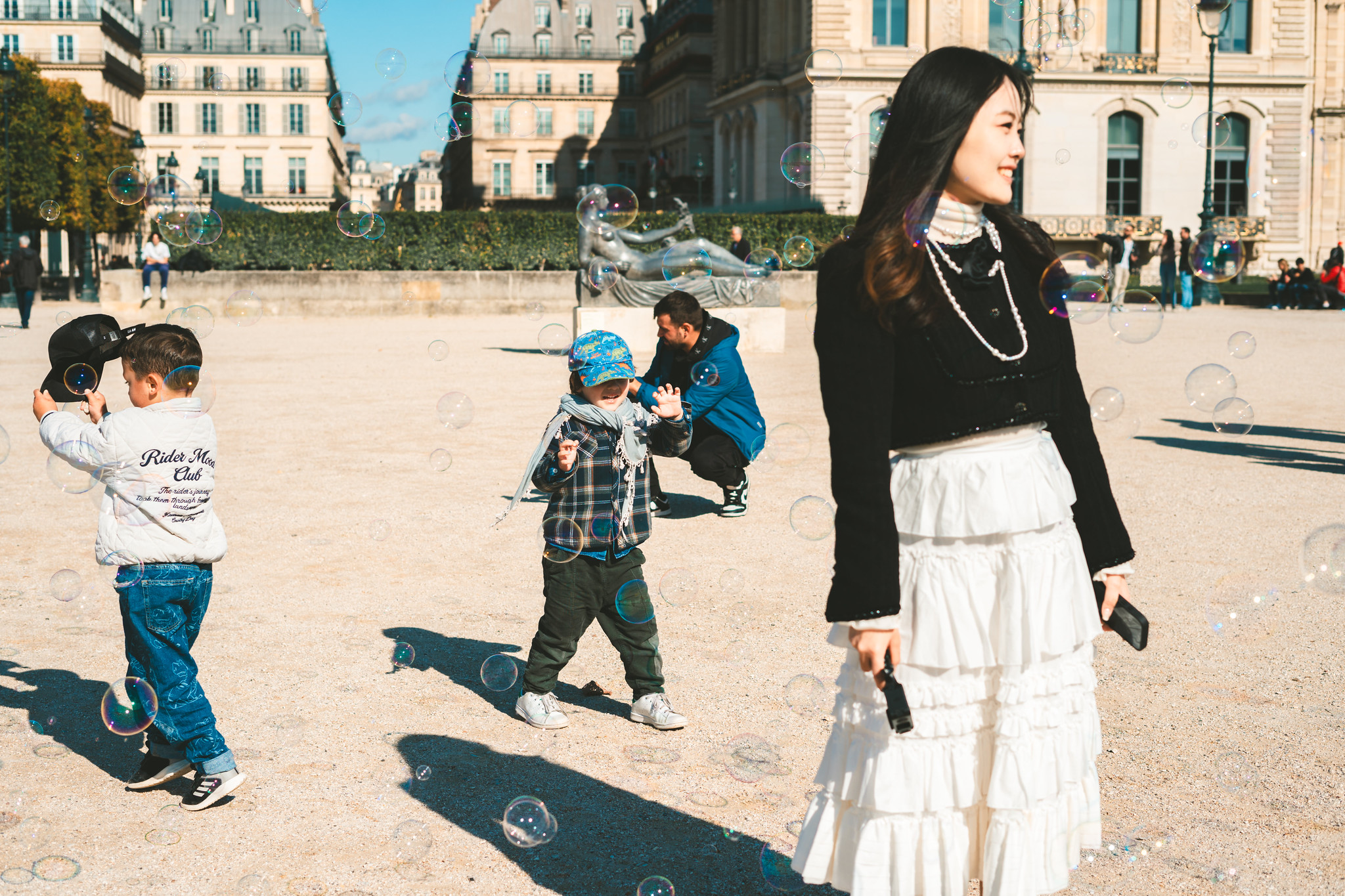
All the same considerations around vulnerability and intent apply, amplified. Children are among the most vulnerable people you'll encounter on the street. They can't consent to being documented. In most street and documentary contexts, the right approach is to not make a child's face the subject. They can be part of the environment of a photograph without being identifiable. In motion, in shadow, facing away, a piece of the composition rather than the point of it.
When I'm at an event where children are present and some degree of documentation is unavoidable, the conversation with parents comes first. What are the images for. Where are they going. Who will have access. That's the minimum, and it's not difficult to do.
I've come home with shots I loved technically, good light, good frame, and not used them because identifiable children were prominent in the frame without any surrounding context that justified it. The quality of an image as a photographic object doesn't override what's in it.
tl;dr
Context. Intention. Usage. Those three things resolve most of the questions, or at least tell you which questions to ask.
- Why are you making this image?
- Who does it serve?
- Where is it going, and what happens to the person in it once it gets there?
- Are you punching up or punching down?
- If the situation were reversed, would you want this photograph taken?
You won't always get the answers right. I misread situations constantly. The goal isn't a perfect ethical record. It's the persistent, intentional act of trying to do a little better than you did yesterday.
Picking up a camera doesn't make you more privileged or entitled than you are anywhere else in your life. The same ethics apply.